How to Reopen an Agreement When Circumstances Change
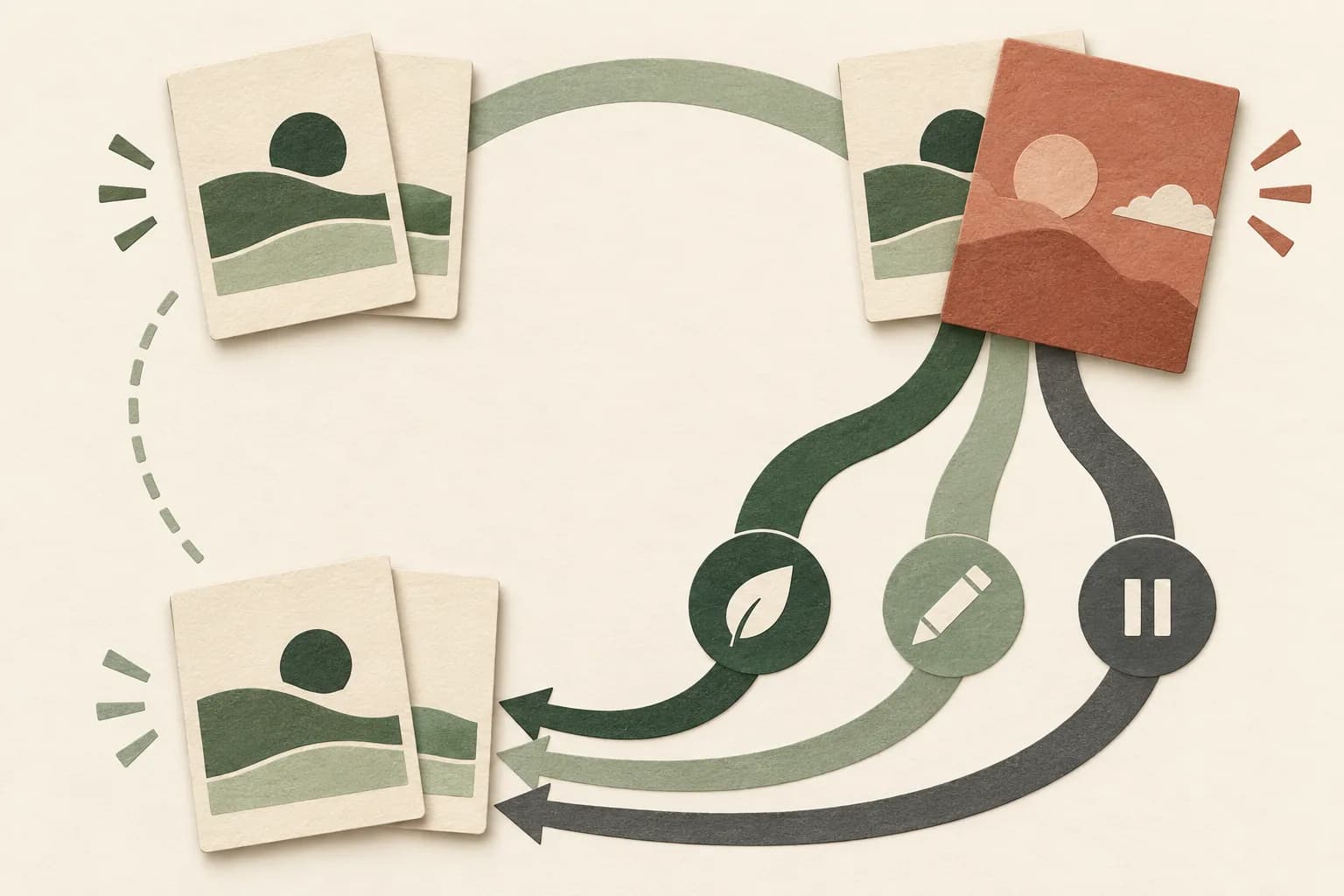
Reopen a changed agreement by preserving the valid earlier yes, naming the new fact without motive, restoring keep-revise-pause choices, and confirming the fresh decision in the other person's words.
Yesterday, two people agreed to launch on Friday if the final review stayed on schedule. Today, the reviewer finds a problem that needs another day.
The facts changed. But the conversation can quickly turn into a judgment about character.
"You already said yes" makes the first person sound inconsistent. "That was before this changed" can make the second person sound defensive. Within a few sentences, they are no longer deciding what to do on Friday. They are arguing about who is reliable, who is moving the goalposts, and whether the earlier yes meant anything.
The better move is to preserve the earlier agreement and reopen only the part the new fact affects. That requires a communication process, not just a new decision.
Quick Takeaways
- A valid yes can become outdated without becoming dishonest.
- Start by preserving what made the earlier decision reasonable.
- Name the changed fact before interpreting anyone's motives or character.
- Do not use the earlier yes as leverage; return a real choice between keeping, revising, and pausing.
- Close with an own-words restatement of the fresh decision, not "Are we still aligned?"
Direct Answers
When should an agreement be reopened?
Reopen it when an observable circumstance changes enough that the original decision may no longer be accurate, safe, workable, or fair. The trigger is not ordinary discomfort. It is a meaningful change in evidence, capacity, timing, scope, authority, risk, or another condition that mattered to the decision.
If the condition was never clear in the first place, use the Condition Check Before Final Commitment instead. That article handles a hidden condition before the first yes. This one starts after a real agreement already existed.
How do I revisit an agreement without sounding unreliable?
Separate the quality of the earlier decision from the accuracy of the current one. Say what both people knew when they agreed, then name what is different now. This makes it possible to say, "The first decision was reasonable, and the current facts deserve a new decision."
Reliability does not mean repeating the same answer after the situation changes. It means making the change visible, returning it to the people affected, and not pretending the old decision automatically covers the new state.
What should I say when circumstances change after someone agrees?
Use this five-part message:
We agreed to [original decision] when [relevant condition] was true. Since then, [observable fact] changed. I am not treating the earlier yes as a mistake or asking either of us to defend it. Given the current facts, should we keep, revise, or pause the agreement? My read is [option and reason]. How would you state the updated decision and next step?
The wording can be shorter in a normal conversation. Keep the structure: valid old decision, changed fact, no character judgment, real choices, fresh confirmation.
When should I pause instead of trying to renegotiate?
Pause when the changed fact is disputed, the earlier agreement cannot be verified, or urgent constraints make the old action unsafe. Do not use this protocol when refusal could trigger retaliation, coercive control, or material harm. Move to a safer organizational, safeguarding, legal, or emergency channel instead. A conversation cannot waive legal rights or mandatory safety and policy duties.
The Agreement-Reopening Protocol
Use the protocol as soon as the relevant change becomes visible and before either person invests heavily in defending a position. First check that both people can disagree safely and that the decision is actually theirs to revisit. Without those conditions, keep-revise-pause is not a real choice.
1. Re-anchor the valid earlier yes
Start with what was genuinely agreed.
We agreed to launch Friday if the review stayed on schedule.
This sentence does two jobs. It signals that you are not erasing the earlier conversation, and it preserves the condition that made the yes reasonable.
Avoid opening with "You said we could launch Friday." That phrasing turns the old yes into evidence against the other person. It invites a defense of consistency before anyone has discussed the new fact.
If you cannot state the earlier decision and its relevant condition without argument, the problem is not yet a changed agreement. What people originally agreed is still unclear.
2. Name the changed fact without motive
Describe what is different in language another person could verify.
The review found a billing error that needs another day to correct.
Do not add a motive:
- "Legal got nervous again."
- "Product changed its mind."
- "You are backing away because the deadline is uncomfortable."
Those statements may feel explanatory, but they convert a situational change into a claim about a person. Keep the changed fact in the foreground before treating anyone's new position as evidence of unreliability.
If both people do not agree on the fact itself, stop here. Move to How to Ask for the Other Person's Version Before Resolving a Disagreement before proposing a revised agreement.
3. Separate revision from character judgment
Say explicitly what the change does not prove.
The Friday decision made sense with what we knew yesterday. This update does not make that yes dishonest; it changes the decision we need to make today.
This is not empty reassurance. It reduces the pressure to defend consistency at the expense of a workable plan. It cannot guarantee that the other person feels free to revise; your conduct and the power relationship matter more than one sentence.
4. Return a real keep, revise, or pause choice
Put the current decision back on the table.
- Keep: the changed fact does not alter the agreement enough to justify a revision.
- Revise: the goal still holds, but timing, scope, owner, evidence, or safeguards need to change.
- Pause: the current uncertainty is too important to proceed safely.
Then give your recommendation without disguising it as the only acceptable answer.
My read is that we keep the launch decision but move it to Monday because the review requirement still matters. I do not think we should ship Friday and treat the missing review as a minor detail. How do you see it?
Before calling these real choices, check whether the other person can reject your recommendation without punishment or loss unrelated to the decision. Also check whether both of you have authority to revise the agreement. If either answer is no, stop the direct negotiation and use the appropriate safer or authorized route.
5. Confirm the fresh agreement in the other person's words
Do not finish with "Are we aligned?" It is too easy to answer yes while holding different versions of the new decision.
Invite a short restatement:
How would you state what we are doing now, why it changed, and what happens next?
Then confirm or correct it. Either person can restate the decision. Do not turn the request into a test imposed by the more powerful person; if it feels that way, summarize the agreement yourself and invite correction. The Restatement Checkpoint Before Action covers closed-loop confirmation in more depth.
Worked Example: The Friday Launch
The product lead and operations lead agreed to launch Friday if the billing review stayed on schedule. On Thursday morning, the reviewer finds an error that affects the final customer copy.
The weak exchange begins like this:
Product: We agreed to Friday. We cannot keep moving the date every time a reviewer raises something.
Operations: I did agree, but this is different. I am not taking the risk just because you want the date.
Both people now have two problems: the launch decision and a threat to their reliability. Each new sentence is likely to defend character rather than test the current facts.
The stronger exchange preserves the old yes without forcing an immediate new one:
Product: We agreed to Friday if the billing review stayed on schedule. The review found an error, so that condition changed. Yesterday's yes still made sense. My read is that we move to Monday. What do you think?
Operations: I am not ready to choose Monday. I need the size of the fix first.
Product: Fair. Let's pause the date until noon. Can you confirm the impact by then?
Operations: Yes. The scope stays the same, the launch date is open, and I will bring the impact estimate at noon.
Product: That's my understanding too. We decide the date after that.
The second exchange does not guarantee agreement or remove the cost of delay. It does something more basic: it keeps the decision about the launch instead of turning it into a trial of either person's integrity.
Common Edge Cases
The original condition was never explicit
Do not pretend there was a clean conditional agreement. Return to the Condition Check Before Final Commitment and establish what the yes actually depended on.
The two sides disagree about what changed
Do not rush to keep, revise, or pause. First ask for the other person's version and identify the shared facts. A revised agreement built on disputed evidence will usually reproduce the same conflict one step later.
Someone already acted outside the agreement
A neutral reopening is no longer enough. If a person widened scope, skipped an approval, spent money, sent a message, or created another observable harm, use How to Name the Trust Breach Before Asking for Repair. Changed circumstances explain why a conversation must reopen; they do not erase responsibility for action already taken outside the agreement.
Ordinary pressure has already damaged the exchange
If someone feels cornered by "you promised," stop the decision ask. Use How to Repair a Pressure Spike Before Resuming the Decision to name the pressure and restore choice before considering whether the agreement can be revisited.
This route is for a repairable pressure spike, not threats, coercive control, retaliation, or a dependency that makes refusal unsafe. In those cases, do not resume direct renegotiation. Use a safer manager, HR, union, safeguarding, legal, emergency, or other appropriate channel.
Safety, law, or policy already determines the next move
Some decisions are not available for conversational renegotiation. If a mandatory safety control, legal right, compliance duty, or standing policy requires a pause or escalation, follow that route first. The five-step protocol cannot authorize an exception or replace qualified advice.
The change is small and reversible
Not every update needs a formal five-step conversation. For a low-stakes, reversible change, one sentence may be enough:
We agreed to the earlier version before this detail changed. I think the agreement still holds, but I want to check that you see it the same way.
Use more structure when the cost of false agreement is high or when reliability and trust are already becoming part of the argument.
Where Grais Fits
Grais can help draft the reopening message beside the active conversation, but it should not decide whether the change justifies a new agreement. The public Getting Started guide describes a workflow where the user reviews, edits, inserts, and sends the reply. The v0.11 product update similarly describes planning, context, and reply preparation with human approval.
A useful review question is whether the draft states the changed fact without using the earlier yes as leverage. The people in the conversation still own the answer.
Evidence Map
- Situational explanation before character judgment. Gilbert and Malone review correspondence bias and the tendency to infer dispositions from behavior that situations may explain [1]. This supports restraint in attributing a changed position to unreliability; it does not validate the full protocol.
- Autonomy before consistency pressure. Steindl et al. review reactance under threats to behavioral freedom [2]. The article applies that mechanism cautiously to the risk of using an earlier yes as leverage; it does not claim a sentence can prevent reactance.
- Voice before the revised decision. Lind et al. found higher fairness judgments in a 179-participant experiment when people had voice than when they had none [3]. The study supports the process principle, not a claim about business outcomes.
- Choice and relationship support. Kors et al. synthesize mechanisms in autonomy-supportive consultation [4]. Their 18-article review identifies relationship building and exploring needs as supporting mechanisms. The transfer is limited to those communication principles.
- Own-words understanding. Talevski et al. review teach-back evidence [5], while AHRQ describes the sender-receiver confirmation loop in check-back communication [6]. The teach-back review included 20 heterogeneous studies. Together the sources support checking understanding rather than assuming alignment, not forcing a restatement as proof of consent.
References
- Gilbert DT, Malone PS. The correspondence bias. Psychological Bulletin. 1995;117(1):21-38.
- Steindl C, Jonas E, Sittenthaler S, Traut-Mattausch E, Greenberg J. Understanding Psychological Reactance: New Developments and Findings. Zeitschrift fur Psychologie. 2015;223(4):205-214.
- Lind EA, Kanfer R, Earley PC. Voice, Control, and Procedural Justice: Instrumental and Noninstrumental Concerns in Fairness Judgments. Journal of Personality and Social Psychology. 1990;59(5):952-959.
- Kors JM, Paternotte E, Martin L, et al. Factors influencing autonomy supportive consultation: A realist review. Patient Education and Counseling. 2020;103(10):2069-2077.
- Talevski J, Wong Shee A, Rasmussen B, Kemp G, Beauchamp A. Teach-back: A systematic review of implementation and impacts. PLOS ONE. 2020;15(4):e0231350.
- Agency for Healthcare Research and Quality. Tool: Check-Back (or Repeat-Back). TeamSTEPPS 3.0. Reviewed July 2023.
Article guidance
Scenario family: Relationship Trust Repair
Scenario: SCEN REPAIR 008
Use when:
- A valid agreement already exists, but an observable circumstance has changed enough to affect the decision.
- Someone is using the earlier yes as proof that the current decision should not be revisited.
- You need a fresh keep, revise, or pause decision without discarding the parts of the agreement that still hold.
- Both people can disagree safely and the decision is actually theirs to revisit.
Do not use when:
- The original condition was never explicit or the first agreement was not actually settled.
- The parties disagree about what happened and need to establish the facts first.
- Someone already acted outside the agreement and caused a trust breach that must be named and repaired.
- Refusal carries a threat of retaliation, coercive control, or material harm, or a mandatory safety, legal, or policy route takes precedence.
Questions this article answers:
- When should an agreement be reopened?
- How do I revisit an agreement without sounding unreliable?
- What should I say when circumstances change after someone agrees?
- When should I pause instead of trying to renegotiate?
Continue reading
Similar research articles
- Sales Qualification
How Do You Tell Polite Interest From a Real Commitment?
A face-safe protocol for clarifying whether a positive response means acknowledgment, curiosity, evaluation, or a real next-step commitment.
- Commitment
Condition Check Before Final Commitment
A communication protocol for making the condition behind a yes explicit before a commitment is treated as final so decisions do not reverse later under pressure.
- Sales Qualification
How to Surface Conflicting Decision Criteria Without Forcing Disclosure
A face-safe communication protocol for making stakeholder criteria differences visible without pressuring one participant to expose absent colleagues.